How to tell a child their hamster or rat has died, and what to say next
Tell them soon, use the word "died", and keep it short and true: "Biscuit died this morning. Her body stopped working, and she can't come back." You're not alone in finding this hard; 93.4%[1] of parents in an RSPCA survey wanted better guidance on helping children through pet loss.
By the Rodent Cremation Services editorial team · Updated September 24, 2026 · 4 min read · Sources
- Simple wording for toddlers to teenagers
- Whether a child should see the body
- What to do if your child feels it was their fault
The short answer
How do you tell a child their pet has died?
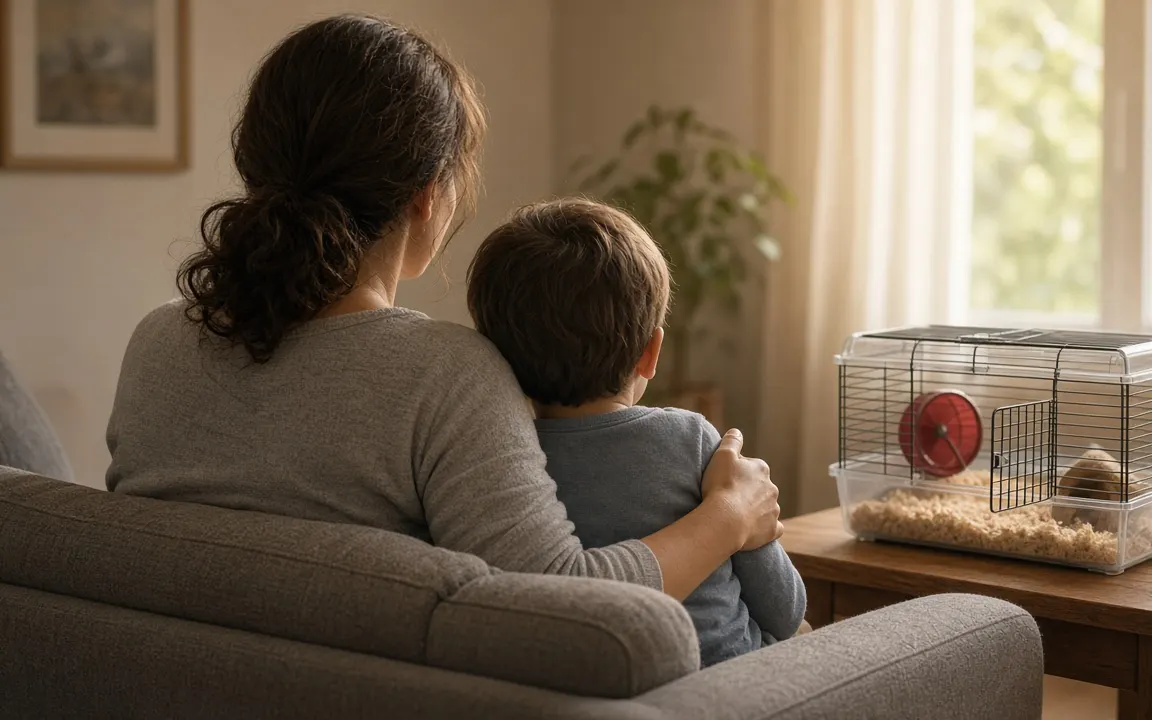
Find a quiet moment soon, sit at their level and say it plainly: "I have some sad news. Pip died last night." Explain what "died" means in one sentence, such as "his body stopped working and he can't feel hungry, cold or scared any more." Then stop talking and let them react. The Child Mind Institute's guidance on children and grief makes the same point: short, honest answers and room for questions. Crying, questions, silence or running off to play are all normal.
Avoid "went to sleep", "we lost him" or "he ran away". Young children take words literally and can become frightened of sleep or keep searching. Also avoid quietly swapping in a lookalike hamster. Children usually find out, and it teaches them that grown-ups hide sad things.
Age by age
What should you say to a child at each age?
| Age | What they understand | What to say and do |
|---|---|---|
| Under 5 | Death may seem temporary or reversible | Short, repeated, concrete: "Pip died. He won't wake up. We'll miss him." Expect the same questions many times. |
| 5 to 8 | Beginning to see death as permanent; may worry it's catching | Explain the cause simply, reassure them they and you are healthy, and give them a job in the goodbye. |
| 9 to 12 | Understands permanence; may ask detailed questions | Answer honestly, including about euthanasia. Let them help choose burial or cremation. |
| Teenagers | Adult understanding; may hide feelings | Treat them as a co-owner. Offer privacy, and don't dismiss it as "just a hamster". |
Hamsters, mice and gerbils are often a child's first pet because they're small and affordable. Around 6 million[2] US households keep small animals, according to the American Pet Products Association, and 18% of those have a hamster[3]. That short life, a median of 1.75 years[4] for UK hamsters, means many children meet death for the first time through a pet that fits in their hands. It can happen again soon, too: by our estimate, an average UK cat lives about 6.7x[5] as long as a pet hamster, so a child who keeps hamsters may say goodbye several times before a friend with a cat does once.
Is this a child's first experience of a pet dying?
Tap an answer to vote and see how others answered. Anonymous.
A common question
Should a child see their dead hamster?
If they want to, usually yes. Seeing a pet lying still and peaceful helps many children understand that death is real, and it's often less frightening than what they imagine. Prepare them first: "She'll feel cool and she won't move. Her eyes might be open. You can stroke her if you want to."
- Wrap the pet in a soft cloth in a lined box first, so the child sees something calm.
- Stay beside them, and let them leave whenever they like.
- Never insist. A child who says no can say goodbye to a photo instead.
- Wash hands afterward, especially if the pet was ill, as the CDC advises for small mammals.
When they blame themselves
What if your child thinks it was their fault?
Children often ask, "Did I squeeze him too hard?" or "Is it because I forgot his water?" Take the question seriously and answer honestly. Most rodent deaths come from illness or old age that nobody could have spotted; small animals hide sickness very well. If a care mistake did play a part, the kind answer is still true: "You loved him and you were learning. Grown-ups make mistakes with pets too."
Children also notice when adults feel guilty. If you're blaming yourself, say something like "I wish I'd noticed sooner too", which shows them that regret is normal and survivable. Our page on grief after losing a rodent talks about the guilt adults feel as well.
Letting them help
How can children take part in the goodbye?
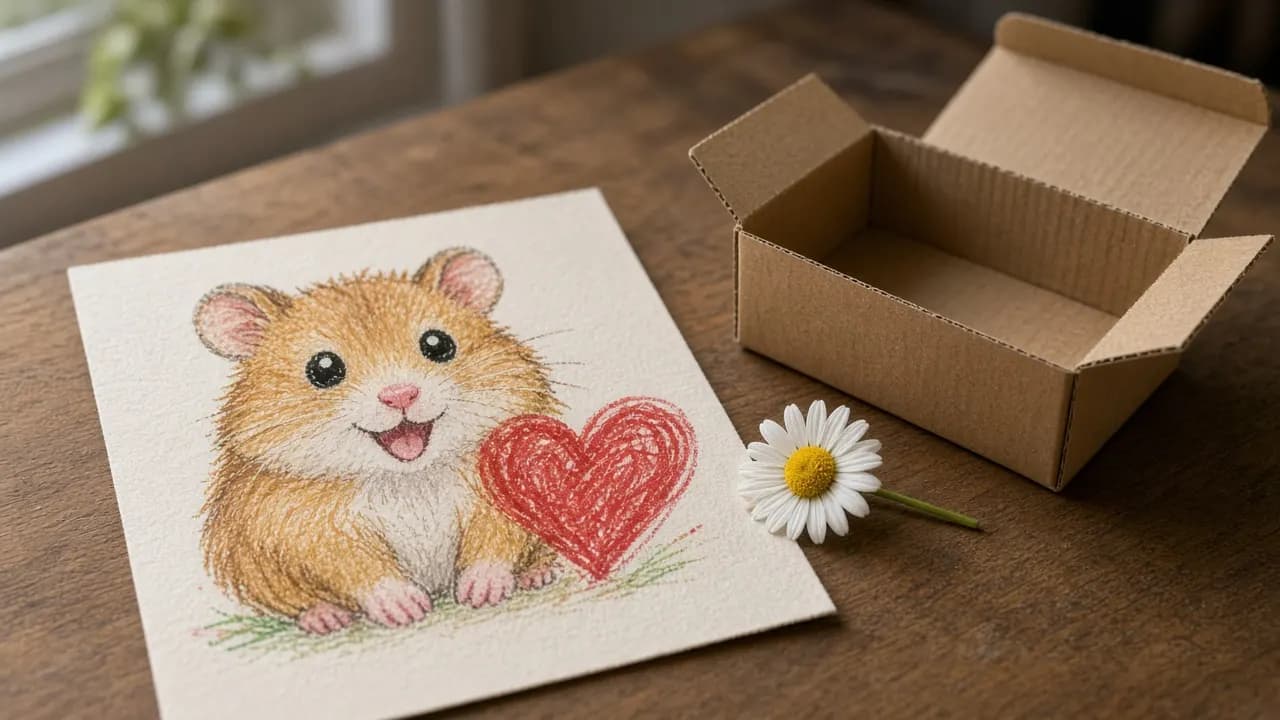
- Decorate the box with drawings, stickers or their pet's name.
- Choose what goes in: a favorite chew, a few seeds, a note.
- Pick the spot for a garden or planter burial, or help choose between burial and cremation.
- Say one thing they'll remember, out loud or in writing.
- Make a memorial afterward, from our memorial ideas for rodents.
If siblings each want something to keep and you choose private cremation, a rat or large hamster can yield enough ashes for two or three tiny vials. The ashes sharing planner shows how far a small amount goes. Our overview of burial and cremation options explains which choices children can be most involved in, and our local pages show what's available near you. The poll results show how other families handled a child's first loss.

Free tool
Ashes sharing planner
Split ashes fairly between family members, keepsake urns and jewelry.
The weeks after
How long will a child grieve for a hamster?
Children tend to grieve in bursts: fine at lunch, heartbroken at bedtime, fine again the next day. They may bring it up weeks later, at a birthday or when they see a hamster in a shop. Answer each time, as patiently as the first. Let their teacher know, as sadness can show up at school.
Adults can find it harder than expected too; in the RSPCA's large pet-loss survey, 66.9%[6] of bereaved owners were surprised by the intensity of their grief. When the class hamster has died, teachers can use the classroom goodbye guide. Whether and when to get a new pet is a family decision; involve the child, and wait until they can welcome a new animal rather than a replacement.
A first pet's death is often a child's first lesson in grief. Handled gently, it's also a lesson that love and sadness can both be survived.

Reader polls
What would you choose?
Vote anonymously and see how other readers answered. The results are live counts from people who visit this site, so they show real opinions, not a scientific sample.
Is this a child's first experience of a pet dying?
Tap an answer to vote and see how others answered. Anonymous.
What helped you most in the first weeks?
Tap an answer to vote and see how others answered. Anonymous.
For a pet this small, which goodbye feels right to you?
Tap an answer to vote and see how others answered. Anonymous.


Questions people ask
Should I tell my child the hamster was put to sleep?
Yes, in simple, honest words, but avoid the phrase "put to sleep" with young children. Try: "The vet gave him medicine so he could die peacefully without pain, because he was very sick and couldn't get better." Older children may want to be part of the decision or to say goodbye beforehand.
Should I replace my child's hamster before they notice?
Try not to. Children often spot the difference, and discovering the swap can damage trust and delay grief. Telling the truth gently gives them a chance to say goodbye and learn that sad things can be talked about. A new pet can come later, openly, as a new friend.
Is it OK for my child to miss school after a pet dies?
Usually a child can go to school, and routine often helps. If they're very upset or the death happened that morning, a late start or quiet day at home is reasonable. Let the teacher know either way so they can be gentle.
Should young children go to the burial?
If they'd like to, yes. Keep it short, explain what will happen beforehand, and give them a small job such as placing a flower. If they don't want to come, they can draw a picture to go in the grave instead. Neither choice is wrong.
What books help children with pet loss?
Picture books about a pet dying can open conversations, especially for children under eight. Ask a librarian for current titles about pet loss and death. Read the book yourself first, to check the wording fits what you've told your child and your family's beliefs.
My child doesn't seem upset. Is that normal?
Very normal. Many children process loss in short bursts and return to play quickly. Some grieve later, or show it through behavior rather than words. Keep the door open by mentioning the pet naturally, and let them know it's fine to feel sad or not sad.


Sources and our estimates
- [1] 93.4% of parents in the RSPCA survey wanted better guidance on helping children through pet loss. RSPCA — Pet Loss Survey Results, 2026.
- [2] About 6 million US households keep small animals such as rabbits, guinea pigs and hamsters. American Pet Products Association (APPA) 2025 National Pet Owners Survey release, 2025.
- [3] 37% of US small-animal-owning households have a rabbit, 23% a guinea pig and 18% a hamster. American Pet Products Association (APPA) 2025 National Pet Owners Survey release, 2025.
- [4] UK pet hamsters had a median age at death of 1.75 years (range up to 3.65 years); 73% of hamsters seen were Syrian (golden) hamsters. O'Neill DG et al. Demography, disorders and mortality of pet hamsters under primary veterinary care in the UK in 2016. J Small Anim Pract, 2022 (PMID 35732354), 2022.
- [5] An average UK cat lives about 6.7 times as long as an average pet hamster (11.74 vs 1.75 years). Our estimate: 11.74 / 1.75. How we calculate.
- [6] 66.9% of respondents were surprised by how intense their grief was after losing a pet. RSPCA — Pet Loss Survey Results, 2026.
Need aftercare options for your family's pet?
Tell us what you need and where you are. We'll reply by email with clear options and prices so you can decide in your own time.