Burial or cremation for your rodent? Compare what matters to you
In one US survey, owners' preferred future aftercare broke down as 40.4% cremation; 34.9% home burial; 1.9% aquamation[1], so there's no single right answer. Move the sliders to see which option fits your priorities for a pet this small.
- Five priorities, one ranked list
- Home burial treated as a real option
- Small-pet prices, not dog prices
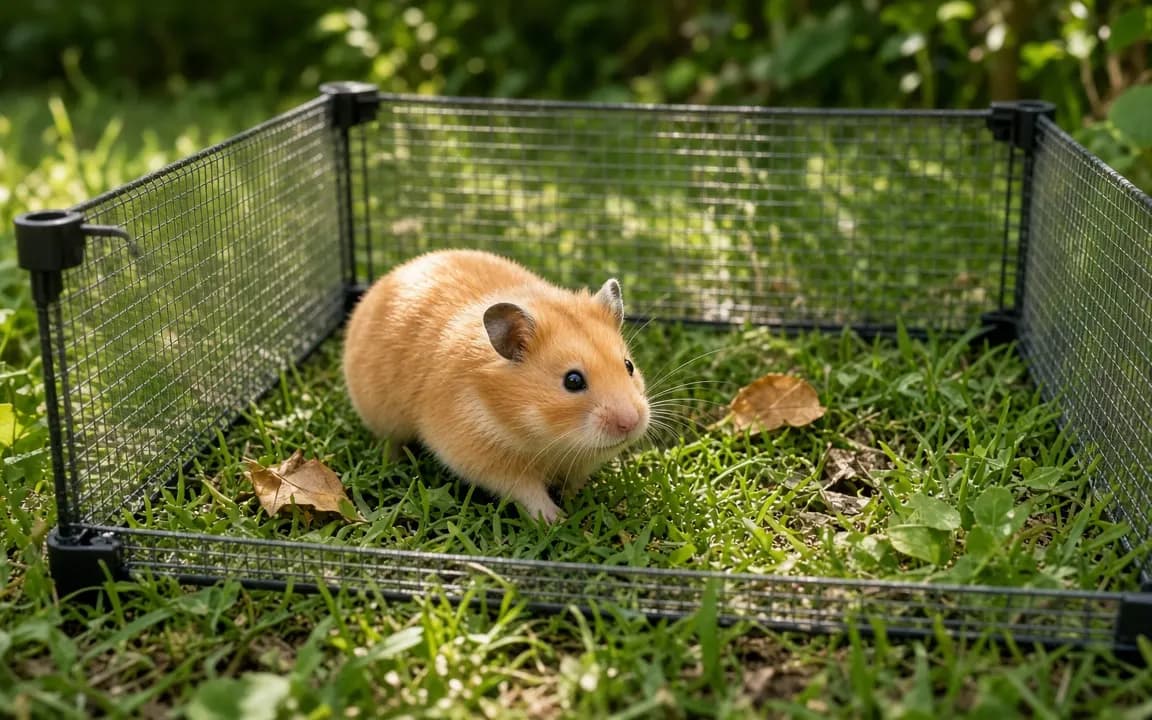
Aftercare options compared
Move each slider to show what matters most to you. The options re-rank as you go. There is no wrong answer.
1. Home burial
91% match
Typical US cost: Little direct cost (your time, tools, maybe a casket)
Good for
- Chosen by about 27% of UK owners
- A place to visit in your own garden
- Easy to hold a goodbye at home
- No crematorium involved
Keep in mind
- Local rules on depth and distance from water apply
- You may move house one day
- Not an option for renters or some areas
2. Water cremation (aquamation)
78% match
Typical US cost: $80–$450
Good for
- About a tenth of the carbon footprint of flame cremation
- Your pet's ashes are returned
- Uses water and alkali instead of flame
Keep in mind
- Fewer providers, so you may travel
- Cycle takes 12–20 hours
3. Private cremation
71% match
Typical US cost: $100–$175
Good for
- Your pet's own ashes come home
- Keep, scatter, bury or share them later
- Often 5–10 days to return
Keep in mind
- Uses fuel and emits CO2
- Costs more than communal
4. Pet cemetery burial
62% match
Typical US cost: $400–$600
Good for
- A permanent, cared-for place to visit
- Often includes a graveside service
- Stays put if you move
Keep in mind
- The most expensive option
- Plot fees and upkeep may continue
5. Communal cremation
56% match
Typical US cost: $30–$200
Good for
- Lowest cost option
- Nothing more to arrange afterwards
Keep in mind
- Ashes are not returned
- Little room for a personal goodbye
Match scores are our own guide to how well each option fits the priorities you set, not a rating of providers. Costs are for a pet under 30 lb (US).
Source: CareCredit (Synchrony) - How Much Does Pet Cremation Cost? (Sept 2023); Embrace Pet Insurance - Bury or Cremate Your Dog? Costs, Pros & Cons; National Geographic — The environmental toll of cremating the dead (2019); Bio-Response Solutions — PET-550 Aquamation System product page; UK Competition and Markets Authority - Veterinary services for household pets, Provisional decision report Part A (Oct 2025)
Next step: Compare local providers and prices →
Using the comparison
Move five sliders, get a ranked shortlist
Each slider runs from "Doesn't matter" to "Very important". Set them honestly, not as you think you should: if cost is the main worry, say so. The tool ranks five options, from home burial to a pet cemetery plot, and shows the pros, cons and a typical cost range for each.
- Keeping costs low: how much the total price matters.
- Keeping them close: whether you want ashes to hold, scatter or wear, or a grave to visit.
- Environmental impact: energy use, emissions and land.
- Speed and simplicity: whether you want it settled today or can wait a week or two.
- Room for a ceremony: whether a goodbye with family, or a child's involvement, matters.
How it calculates
How each option is scored for a very small pet
Behind the ranking, each option is rated on each priority and your slider settings decide how much each rating counts. The table below shows the tool's editorial ratings, from 1 to 5, based on published costs and how each option works. They're the same for every species; only the prices on the cards change with pet size. Burial scores 4 for keeping close because it gives you a grave to visit, even though no ashes come home.
| Option | Cost | Keeping close | Environment | Speed | Ceremony |
|---|---|---|---|---|---|
| Home or planter burial | 5 | 4 | 4 | 5 | 5 |
| Communal cremation | 5 | 1 | 3 | 5 | 1 |
| Private cremation | 3 | 5 | 2 | 3 | 4 |
| Water cremation (aquamation) | 3 | 5 | 5 | 3 | 3 |
| Pet cemetery plot | 1 | 4 | 2 | 3 | 5 |
Cost ranges come from published sources. Embrace Pet Insurance lists communal $30-200; private $100-500+[2], with aquamation at $80-450, and pet cemetery burial at $400-$1,500+[3] depending on size. On this site the cards show about $100 to $175 for private cremation and $400 to $600 for a cemetery plot, the figures for pets under 30 lb. A rodent sits at the bottom of every band, and a cemetery plot is rarely sensible for a pet this small unless the place itself matters to you. By our estimate, the median whole-body burial for a small pet across five posted US pet-cemetery price lists is ~$350[4], plot and opening included, which is more than most rodent owners want to spend.
Worked example
Two households, two different answers
A family with a garden and a seven-year-old whose gerbil has died. They set ceremony and speed to Very important, cost and environment to Somewhat, and keeping them close to Doesn't matter. Home burial comes out clearly first at 97%: it can happen this afternoon, their child can choose the spot and decorate a stone. Communal cremation comes second at 67%, level with water cremation.
A student renting an apartment whose rat of two and a half years has died. They set keeping them close to Very important, speed to A little and leave the rest on Somewhat. Home burial still tops the list at 89%, because the tool can't see the lease, so the student reads on: water cremation comes next at 82% and private cremation at 75%, and private is the easier one to find. Our ashes weight estimator puts a 500 g rat at roughly a tablespoon of ash, enough for a small urn.
The green question
Is water cremation worth seeking out for a rodent?
Aquamation (alkaline hydrolysis) uses water, heat and alkali rather than flame. Pet systems run for 12–20 hours at 200°F[5], according to the Veterinary Sustainability Alliance's overview of aquamation, and they're widely described as using far less energy than flame cremation. Concern is common: one market report says 40%[6] of consumers raise environmental questions about pet aftercare.
Water use is modest too. Industry figures put a pet aquamation cycle at roughly the water of 1–3 pet baths[7], and some machines have separate compartments so several small pets can each be processed individually in one run. For a rodent, ask whether they'll use a compartment or basket sized for tiny bodies, just as you'd ask a flame crematorium about a tray.
For a 100-gram pet, though, any option's footprint is tiny, and a garden burial in a cardboard box is hard to beat. Water cremation makes most sense if you want ashes back and there's a provider nearby. It isn't available everywhere, so check before you set your heart on it.
Being honest
What a ranking can't decide for you
The tool doesn't know your local rules, your soil, or whether your pet was euthanized. That last point matters: since 2003[8], as the Cornell Waste Management Institute notes, US euthanasia drug labels have warned that treated animals must be disposed of by deep burial or cremation because scavenging wildlife can be poisoned. If your pet was put to sleep and you can't dig deep, move burial down your list.
It also can't weigh feelings you haven't named. If a result feels wrong, trust that. Our private vs communal guide for rodents and the full list of services go deeper into each choice.
For a pet this small, which goodbye feels right to you?
Tap an answer to vote and see how others answered. Anonymous.
Next steps
Turning your top choice into a plan
- Burial: check you own the ground or have permission, and see our guide on how to bury a hamster. Teachers can use the classroom goodbye guide.
- Communal or private cremation: price it with the cremation cost calculator.
- Water cremation: ask us whether there's a provider nearby.
- Still torn: a pinch of fur and a photo cost nothing and don't close off any option.
Our local pages cover area rules and prices. When you're ready, send us your details to get exact prices near you.

Reader polls
What would you choose?
Vote anonymously and see how other readers answered. The results are live counts from people who visit this site, so they show real opinions, not a scientific sample.
For a pet this small, which goodbye feels right to you?
Tap an answer to vote and see how others answered. Anonymous.
If you had to decide today, which aftercare would you choose for your pet?
Tap an answer to vote and see how others answered. Anonymous.
Had you heard of water cremation (aquamation) before today?
Tap an answer to vote and see how others answered. Anonymous.

Free tools to help you plan

Aftercare options compared
Compare private, communal and water cremation with burial on cost, timing and what comes home.

Cremation cost calculator
Estimate a realistic price range for your pet's size, location and the type of cremation.

Memorial budget planner
Add up cremation, urn, keepsakes and a farewell so the total holds no surprises.
Questions people ask
Is it better to bury or cremate a hamster?
Neither is better in general. Burial is free, immediate and lets the family take part, which suits many hamster owners. Cremation makes more sense if you rent, can't dig deep, or want to keep a little ash. If your hamster was euthanized, cremation or a very deep grave is the safer choice for wildlife.
Is aquamation available for small pets like rats?
In some areas, yes. Water cremation machines can process small pets, sometimes in separate compartments during one cycle. Availability is patchy, and prices usually sit in the same bands as flame cremation. Ask local providers, or send us your location and we'll check.
Why doesn't the tool recommend a pet cemetery?
It can climb the list if you set room for a ceremony high and cost low, but it never outranks home burial, which scores as well on ceremony and a place to visit at far less cost. For most rodent owners, a cemetery plot costs many times the price of cremation, for a grave only a few inches across. Some cemeteries accept small pets in shared memorial areas, which can cost less.
Can I combine options?
Yes. Some families choose private cremation, then bury the ashes under a plant, which avoids the wildlife risk of burying a euthanized pet while keeping a garden memorial. Others keep a vial and scatter the rest. The tool ranks single options, but you can mix them freely.


Sources and our estimates
- [1] Asked their preferred future after-death care, 40.4% of US owners chose traditional flame cremation and 34.9% home burial; 10.7% chose cemetery burial and 1.9% alkaline hydrolysis (aquamation). Cooney, Kogan, Brooks, Ellis - Pet Owners' Expectations for Pet End-of-Life Support and After-Death Body Care, Topics in Companion Animal Medicine (2020), 2020.
- [2] Embrace Pet Insurance lists US communal cremation at $30-$200, partitioned at $50-$250, private at $100-$500+ and aquamation at $80-$450. Embrace Pet Insurance - Bury or Cremate Your Dog? Costs, Pros & Cons, 2025.
- [3] Embrace lists US pet cemetery burial at $400-$600 for pets under 30 lb up to $800-$1,500+ for pets over 100 lb. Embrace Pet Insurance - Bury or Cremate Your Dog? Costs, Pros & Cons, 2025.
- [4] Across five posted US pet-cemetery price lists, the median whole-body burial for a small pet, including plot and opening/closing, was about $350. Our estimate: median of [Rainier $150 plot incl. first burial, Cedar Bend $290, Forest $350, Great River $750, Precious Memories $1,500]. How we calculate.
- [5] Pet alkaline hydrolysis systems run at about 200°F at atmospheric pressure with a 5% alkaline solution for 12–20 hours. Veterinary Sustainability Alliance — Aquamation, 2024.
- [6] Astute Analytica reports that 40% of consumers raise environmental concerns about pet aftercare choices. Astute Analytica via GlobeNewswire — Global Pet Preservation Services Market to Hit USD 112.7 Million by 2032 (Apr 2, 2024), 2024.
- [7] Aquamation uses about the same water per pet as 1–3 pet baths. Veterinary Sustainability Alliance — Aquamation, 2024.
- [8] Since 2003 the FDA has required euthanasia drug labels to warn that euthanized animals must be disposed of by deep burial, incineration or another approved method to keep scavenging wildlife from eating the carcass. Cornell Waste Management Institute & Penn State - Horse Mortality: Carcass Disposal Alternatives (2012), 2003.
See which options exist near you
Tell us what you need and where you are. We'll reply by email with clear options and prices so you can decide in your own time.