Tiny pets, real goodbyes: rodent aftercare in Grand Island
Rodent keepers in Grand Island say goodbye more often than most pet owners. This guide covers burial depth, private trays, tiny urns and fair prices, without any pressure.
- Communal or private for a 100 g pet
- Cage mates cremated together or apart
- Tiny vials and keepsakes that fit

Grand Island, Nebraska
What rodent aftercare in Grand Island is really like
Grand Island is the Hall County seat, a central Nebraska city set just north of the Platte River and a few miles off Interstate 80. Frame houses from the early 1900s fill the blocks around downtown, with ranch homes and newer subdivisions farther out. Aftercare providers here may serve a wide stretch of the state, so ask whether they collect from home, what the trip costs and how long ashes take.
Each spring, huge numbers of sandhill cranes gather along the Platte near Grand Island, and many locals mark the season with a trip to the river. That connection to the land often shapes how people remember their animals: a stone in the garden, a native plant, or an urn at home. For scattering near the river, get the landowner's permission first.
If it's winter in Grand Island and the ground is hard, you don't have to decide on the spot. Wrap your pet, place them in a small box and keep them in the fridge for a day or two, or ask your vet or crematorium whether freezing until spring is acceptable. Some families bury in the thaw; others choose cremation instead.
Grand Island is home to about 53,943 people, the 4th-largest of the 11 Nebraska communities we cover.
The closest communities we cover are Hastings (23 miles), Kearney (42 miles) and Columbus (62 miles). Providers serving those towns often travel to Grand Island too, so it can be worth asking them for a quote.
62.2%[1]
The NFDA projected Nebraska's cremation rate at 62.2% for 2024.
1.75 years[2]
Pet hamsters in the UK have a median age at death of 1.75 years.
1.5-3 years[3]
Pet rats live about 1.5-3 years and weigh 350-650 g as adults.
3-5% of body weight[4]
Embrace notes cremated remains typically weigh about 3-5% of the pet's original body weight.
Where these figures come from: Embrace Pet Insurance and O'Neill et al. 2022, Journal of Small Animal Practice.

Local attitudes to cremation and burial
With roughly 62.2%[1] of people in Nebraska now cremated, many families mark a death with a gathering rather than a formal service. A pet rat's goodbye can borrow that idea: a few friends who knew them, photos on the TV, a favorite treat set out on a saucer. What happens to the body matters less than giving the moment some shape.
The Nebraska figure comes from NFDA 2024 Cremation & Burial Report state projections (via Occasional Sage) (2024). It describes people, not pets, so read it as a sign of local attitudes rather than a pet statistic.
Seasonal timing for hamsters and rats in Grand Island
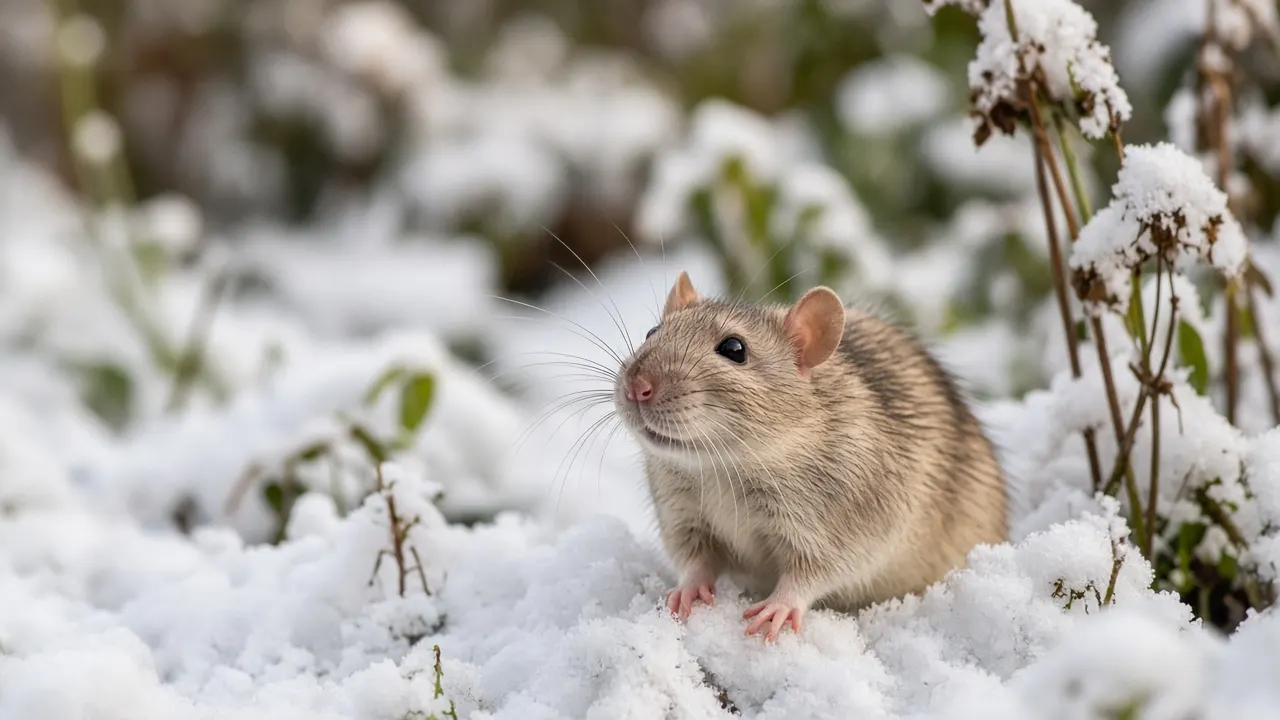
Snowy roads around Grand Island can delay a vet visit or a crematorium drop-off. With a pet this small, that's manageable: keep them cool and wrapped, and go when it's safe. If your hamster or rat is very old or ill and a storm is forecast, ask your vet now what they'd suggest, rather than on the night.
Grand Island winters are cold, with average lows at or below freezing in January, February, March, November and December. Before anything else, check it isn't torpor. Hamsters in a chilly room can drop into a deep, cold sleep that looks like death: stiff, cool, barely breathing. Warm them gently in your hands or a towel and watch for a few hours before deciding.
Paying for a pocket pet's goodbye in Grand Island
A pet cemetery plot is the priciest route by far. By our estimate, whole-body burial of a small pet at a US pet cemetery has a median of about $350,[5] including the plot and opening the grave. Most Grand Island families with a hamster or mouse choose a free garden or planter burial instead, or communal cremation at a fraction of that.
The full price table by size is on our Nebraska page, and the services page explains what each option includes.

Free tool
Cremation cost calculator
Estimate a realistic price range for your pet's size, location and the type of cremation.
Before you bury or scatter in Nebraska
If your rodent died of something contagious, the rules in Nebraska and common sense point the same way: cremation is the safer choice, and used bedding should be bagged and binned rather than composted. Your vet can tell you whether the illness was likely infectious. Burial and scattering details for Nebraska are set out below.
Nebraska keeps an official directory of local governments; use it to reach the county or city office that covers Grand Island.
The Nebraska page sets out who oversees pet cremation and what the state says about burial and scattering. Grand Island's own bylaws can sit on top of that, so ask before you dig.
If your rat, mouse or hamster has just died
- Book a vet who handles rodents regularly for the euthanasia, and ask whether they sedate small pets first; most do.
- Decide on aftercare before the day arrives, whether private cremation, communal, or burial at home, rather than working it out at reception.
- Bring a small lined box and a scrap of familiar bedding to settle your pet during the journey and to lay them on afterwards.
- Ask whether you can stay for the whole appointment. Many owners find that being there eases the guilt later.
- If you plan a home burial, tell the vet. Euthanasia medication stays in a pet's tissues, so pick a place animals can't reach and cover it with a heavy slab.
- Settle the bill beforehand if the practice allows, so you can leave quietly when it's over.
- Give surviving cage mates a few minutes to sniff and investigate, if your pet comes home with you.
Keeping a hamster, rat or mouse close
Grand Island summers are hot, with July highs around 88F and plenty of humidity, while winters bring January lows near 16F and frozen ground from roughly November into March. For those months, cremation is the practical choice for most families. On hot days, the basement is usually your best spot until collection; a towel below and ice packs in a cloth bag beside your pet help.
look through our guides and the blog, or see what other families chose in the poll results, Compare every option on our services page, use the free tools before you ring anyone. If you live between Grand Island and Bellevue, Omaha, Kearney and Fremont, either page applies. Every other community in Nebraska, and all of the United States, is listed too.

Reader polls
What would you choose?
Vote anonymously and see how other readers answered. The results are live counts from people who visit this site, so they show real opinions, not a scientific sample.
Which little companion are you remembering or planning for?
Tap an answer to vote and see how others answered. Anonymous.
For a pet this small, which goodbye feels right to you?
Tap an answer to vote and see how others answered. Anonymous.
If you had to decide today, which aftercare would you choose for your pet?
Tap an answer to vote and see how others answered. Anonymous.

Free tools to help you plan
Cremation cost calculator
Estimate a realistic price range for your pet's size, location and the type of cremation.
Ashes weight estimator
See roughly how much ash to expect back, by species and body weight.

Urn size calculator
Find the urn volume you need from your pet's weight, plus keepsake and sharing options.
Questions people ask
When is the hardest time of year to arrange a burial in Grand Island?
January, February, March, November and December: average lows are below freezing then, and frozen ground makes a home grave slow or impossible until it thaws. The other pressure point is July, when highs around 88°F mean a body needs cooling and collecting quickly.
Can a provider from a neighbouring town collect from Grand Island?
Usually yes. Hastings is about 23 miles away, Kearney is about 42 miles away and Columbus is about 62 miles away, all inside a normal collection radius. Get the mileage written into the quote so there is no surprise on the day.
Why does the Grand Island page quote a human cremation rate?
Because it is the best local signal we have. NFDA 2024 Cremation & Burial Report state projections (via Occasional Sage) (2024) reports about 62.2%[1] of Nebraska residents are cremated. There is no official pet equivalent, and inventing one would be worse than quoting a real, clearly labelled number.
How long until I get my rat's ashes back in Grand Island?
Many families wait about one to two weeks. In a smaller town where pets travel to a regional crematorium, it can take longer because collections run on set days. Ask for an expected return date when you book, and whether you can collect the ashes yourself to save time.
What happens to a classroom hamster or rat when it dies?
Schools usually let the teacher decide, often with parents. A short ceremony and a burial in the school garden, with the head's permission, or communal cremation through a local vet, are the common choices. Our classroom goodbye guide has a simple plan teachers can use in Grand Island or anywhere.
My vet near Grand Island doesn't see rodents. What now?
That's common in smaller towns. You don't need a vet to confirm death if you're sure, and you can take your pet straight to a crematorium or bury at home. For euthanasia or a sudden loss you're unsure about, the nearest exotics vet may be in a larger centre such as Grand Island. Ringing ahead saves a wasted trip.


Sources and our estimates
- [1] The NFDA projected Nebraska's cremation rate at 62.2% for 2024. NFDA 2024 Cremation & Burial Report state projections (via Occasional Sage), 2024.
- [2] Pet hamsters in the UK have a median age at death of 1.75 years. O'Neill et al. 2022, Journal of Small Animal Practice - VetCompass hamsters, 2022.
- [3] Pet rats live about 1.5-3 years and weigh 350-650 g as adults. Merck Veterinary Manual - Table: Rats at a Glance.
- [4] Embrace notes cremated remains typically weigh about 3-5% of the pet's original body weight. Embrace Pet Insurance - Bury or Cremate Your Dog? Costs, Pros & Cons, 2025.
- [5] Across five posted US pet-cemetery price lists, the median whole-body burial for a small pet, including plot and opening/closing, was about $350. Our estimate: median of [Rainier $150 plot incl. first burial, Cedar Bend $290, Forest $350, Great River $750, Precious Memories $1,500]. How we calculate.
- [6] Published ashes-return times across the network's markets range from same-day (paid express) to about 4 weeks; a conservative typical window is 3-14 days. Our estimate: min/max across sources: Lambeth 3 days; US 5-10 days; RSPCA QLD within 14 days; AniCura Sweden 2-4 weeks. How we calculate.
Get rodent aftercare options in Grand Island
Tell us what you need and where you are. We'll reply by email with clear options and prices so you can decide in your own time.